How to prepare your loft for spray foam removal in Halifax
Empty the loft, protect the stairwell and clear the driveway. Here is exactly how to prepare your loft for spray foam removal in Halifax before the crew arrives.
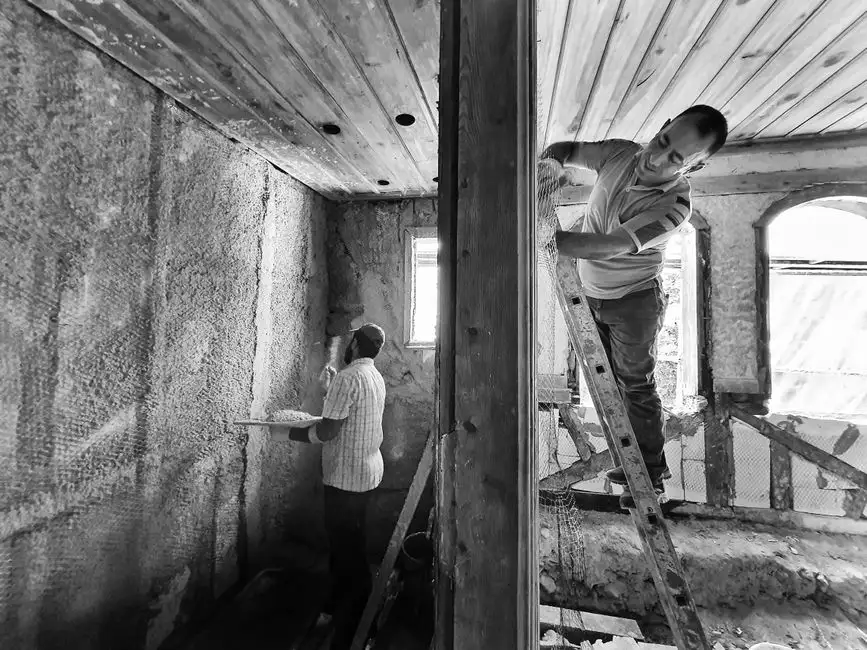
Preparing your loft for spray foam removal in Halifax means three things: empty the loft floor completely, protect the stairwell and landing, and give the crew clear access to the hatch and a parking spot for the extraction van. Nothing else is required from you - the foam itself, the dust control and the waste disposal are our job, not yours.
Most Halifax lofts take 20 to 30 minutes to clear if you start the night before. Below we cover exactly what to move, what to leave, how much space the team needs, and the mistakes that slow a job down.
What preparing your loft actually involves
Loft preparation for spray foam removal in Halifax is a clearing and access job, not a technical one. You are not removing foam, cutting boards or handling chemicals - you are making the space safe and reachable so a two or three person crew can work without tripping over boxes or damaging your belongings.
Spray foam removal is the process of extracting cured open or closed cell foam from the underside of a roof deck or from between rafters, then disposing of it as controlled waste. It is needed when foam has blocked ventilation, when a mortgage lender flags it, or when a surveyor finds condensation trapped against the timbers.
In a typical Halifax terrace or semi, the loft is the only route in. That is why preparation matters more here than in a detached house with a separate roof access. If your loft is packed to the rafters, the crew loses an hour before any extraction starts - and that hour shows up on your invoice.
How do I prepare my loft for spray foam removal in Halifax?
Clear the loft floor, roll back any loose insulation that is not spray foam, and remove everything you want to keep. Work in this order and you will be done in under half an hour.
- Empty the floor area. Boxes, suitcases, Christmas decorations, bikes, old carpet offcuts - all of it comes down. Anything left in the loft will be covered in fine dust or moved by the crew.
- Leave fixed items in place. Water tanks, boiler flues, pipework, chimney breasts and permanent lighting are not your problem. We work around them.
- Do not touch the foam. Do not pull at it, cut it or try to scrape it. Cured foam releases dust and is far harder to remove once it has been broken up.
- Clear the landing and stairwell. The hatch route needs to be free of furniture, pictures and rugs. Foam comes down in bags, not through a vacuum hose.
- Move the car off the drive. The extraction van needs to sit close to the house. On Halifax's terraced streets that usually means a space directly outside.
If you are unsure whether your foam is open cell or closed cell, leave it alone - we identify it on the first visit. Closed cell foam is denser and takes longer to extract than open cell, which changes the timescale but not your preparation.
Do I need to empty my loft completely?
Yes - the loft floor needs to be completely clear, but you do not need to empty the roof space of fixed equipment. There is a difference between your belongings and the building's own fittings.
Things that must come out:
- Storage boxes, bags and suitcases
- Loose furniture, mattresses and old carpets
- Tools, paint tins and anything on the floor
- Loose mineral wool or fibreglass rolls sitting on top of the foam
Things that stay:
- Cold water tanks and their platforms
- Boiler flues, pipe runs and wiring
- Chimney stacks and structural timbers
- Permanent lighting and junction boxes
If your loft has a boarded floor over the foam, we lift and refit boards as part of the job. You do not need to unscrew anything. For homeowners across Spray foam removal in Halifax City Centre, where many Victorian terraces have narrow hatches and steep stairwells, clearing the landing is often the single biggest time saver.
Access, parking and protecting your home
Access is the part most homeowners underestimate. Spray foam removal in Halifax West Yorkshire usually involves a van, extraction equipment and repeated trips up and down the stairs, so the route from the front door to the hatch needs to be clear.
Here is what we ask for before the day:
- Parking: a space as close to the property as possible. On streets like those around Sowerby Bridge and Elland, that can mean moving a car the night before.
- Hatch access: the loft hatch must open fully. If it is painted shut or has a stiff catch, tell us in advance.
- Stairwell: remove pictures, mirrors and ornaments from the walls on the route. Dust sheets protect the carpet, but not a picture frame.
- Pets and children: keep them out of the working area. The stairwell becomes a busy, one-way route for several hours.
- Power: we need one working socket near the property. Extension leads are fine.
We lay protective sheeting from the front door to the hatch and seal the hatch opening with a dust barrier. Fine dust is unavoidable with any insulation extraction, but a proper barrier keeps it out of your living space rather than spreading it through the house.
What we handle on the day
Once the loft is clear, the rest is our work. A standard Halifax loft takes one to two days depending on foam type, depth and roof access.
Our team arrives, sets up the dust barrier and extraction equipment, then removes the foam in sections. We use a mix of mechanical extraction and, where the foam is bonded hard to the timbers, dry ice blasting spray foam removal in Halifax, West Yorkshire to lift it without gouging the wood. After extraction we inspect the rafters, check ventilation paths and bag the waste for licensed disposal.
Typical 2026 pricing for a standard Halifax loft sits between £1,800 and £3,500 depending on foam type, loft size and access. Closed cell foam at the top end, open cell at the lower end. We confirm the figure after a free assessment, before any work starts.
If you are selling or remortgaging, we also handle mortgage lender spray foam removal in Halifax, West Yorkshire and provide the documentation your lender or surveyor needs.
Common mistakes to avoid
The mistakes we see most often in Halifax lofts are all avoidable, and each one adds time to the job.
- Leaving boxes "just in the corner". There is no safe corner. Everything gets dusty.
- Pulling at the foam to "help". Broken foam is harder to extract and releases more dust.
- Blocking the drive. If the van cannot park close, we lose time carrying waste further.
- Booking a removal before checking the mortgage position. Some lenders want specific paperwork - ask first.
- Assuming the loft will be usable straight after. Allow 24 hours for dust to settle before reinstating storage.
One more: do not book a removal in the same week as a new carpet fitting or a house move. The dust and the stairwell traffic will not mix well with either.
When to call a professional
Call a professional the moment you notice condensation dripping from the roof timbers, a musty smell in the loft, or a mortgage valuation that mentions spray foam. Those are the three signals that removal is not optional.
We cover the whole of Halifax and the surrounding Calder Valley, including Spray foam removal in Sowerby Bridge and the villages towards Todmorden and Hebden Bridge. Every job starts with a free loft assessment - we identify the foam type, measure the space and give you a fixed price before anything is touched.
If you want a broader picture of what we do across the town, our spray foam removal service covers lofts, roofs, cavity walls and commercial buildings.
Frequently Asked Questions
How do I prepare my loft for spray foam removal in Halifax?
Empty the loft floor completely, clear the landing and stairwell, and move your car so the van can park close. Leave fixed items like tanks, pipework and flues in place. That is the full list - allow 20 to 30 minutes the night before.
What do I need to do before spray foam removal in Halifax West Yorkshire?
Clear access, not chemicals. Remove stored items, protect the stairwell route, keep pets and children away, and make sure one socket is available. We handle the dust barrier, extraction, timber inspection and waste disposal on the day.
Do I need to empty my loft for spray foam removal in Halifax?
Yes. The loft floor must be completely clear of your belongings. Fixed equipment such as water tanks, boiler flues and wiring stays in place. Boarded floors are lifted and refitted by our team as part of the job.
Who prepares lofts for spray foam removal in Halifax?
You prepare the contents and access; we prepare the working environment. Our team installs dust barriers, protective sheeting and extraction equipment. If you would rather not clear the loft yourself, tell us when you book and we can discuss options.
How long does spray foam removal take in a Halifax loft?
Most Halifax lofts take one to two days. Open cell foam is quicker to extract than closed cell. Larger roofs, hard-bonded foam or restricted access can push it to three days. We confirm the timescale at the assessment.
Get help with spray foam removal in Halifax
If your loft is ready to clear, we are ready to remove. Spray Foam Removal Halifax covers lofts, roofs and cavity walls across Halifax and the Calder Valley, with free assessments and fixed pricing before we start.
Call 0333 567 2543 to book your loft assessment or to ask any preparation question before the crew arrives.